You might be dealing with headaches that seem to come from nowhere, teeth that feel worn down too soon, or a jaw that clicks when you chew, and it can be hard to connect those daily frustrations to your bite. Many people live with this kind of discomfort for years, assuming it is just stress, aging, or bad luck. Then the problems start to stack up. A cracked tooth here, soreness there, trouble sleeping, and suddenly something that felt minor begins to affect how you eat, speak, and get through the day. A cosmetic dentist Great Falls patients trust may help identify whether your bite is contributing to these ongoing issues.
That is why customized bite alignment matters so much in general dentistry. Your bite is not just about whether your teeth touch. It affects pressure, muscle strain, jaw movement, and the long term health of your natural teeth, fillings, crowns, and implants. When your bite is evaluated as an individual system, not treated with a one size fits all approach, care can be more comfortable and more lasting.
Why can a small bite problem turn into bigger dental issues?
When your upper and lower teeth do not come together in a balanced way, the force of chewing does not spread evenly. One tooth may absorb too much pressure. A dental crown may feel high. Your jaw muscles may overwork to find a position that feels stable, even if that position is not healthy. Because of this tension, you might notice tooth sensitivity, flattened edges, chipped enamel, or pain near the jaw joint.
For some people, the signs are subtle. You wake up with a tight face. You avoid chewy foods. You hear popping in the jaw and brush it off. For others, the effects are more serious. According to the National Institute of Dental and Craniofacial Research, temporomandibular disorders can affect the jaw joints and muscles, often leading to pain, limited movement, and daily discomfort. If your bite is part of the strain, ignoring it can keep the cycle going.
So, where does that leave you? It means the goal of bite correction in dentistry is not simply to make teeth look straight or meet faster. It is to help your whole system work with less stress.
What makes personalized occlusion treatment different from a quick adjustment?
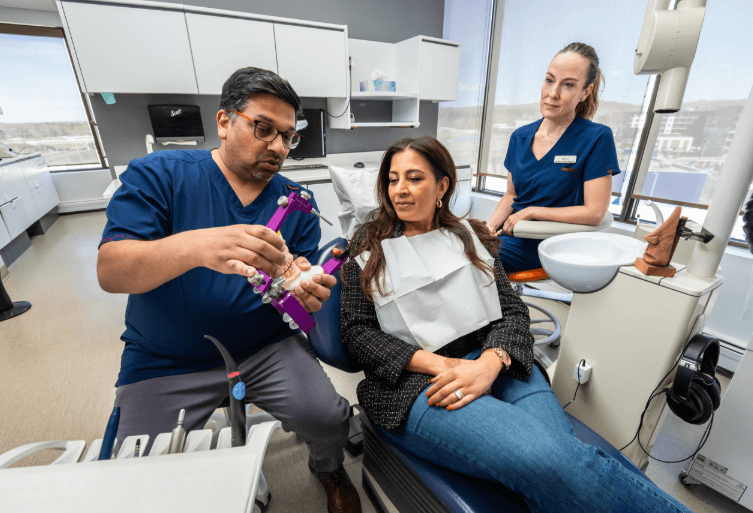
A quick bite adjustment can help in the right situation, especially if a new filling or crown is hitting too soon. But customized care goes further. It looks at how your teeth contact when you close, how your jaw moves side to side, where your muscles tense, and whether worn or missing teeth have changed the way your bite functions over time.
This matters even more when restorative work is involved. A single implant crown, a bridge, or several fillings may all look fine on their own, but if they are placed into an unstable bite, they can carry extra force. That can shorten the life of the restoration and leave you frustrated by repeat repairs. In general and implant dentistry, small details often decide whether treatment simply looks good or truly holds up.
There is also a human side to this. When your bite feels off, you may chew on one side, avoid smiling fully, or worry that every new ache means another procedure is coming. That stress is real. A personalized approach helps reduce guesswork and gives you a clearer path forward.
How does customized bite alignment support your teeth, jaw, and dental work?
Think of your bite as the foundation under everything else. If that foundation is uneven, natural teeth can wear faster and restorations can fail sooner. If it is stable, everyday forces are easier on your mouth. MedlinePlus explains that tooth abnormalities and alignment problems can affect chewing, comfort, and oral health, which is why function matters just as much as appearance.
In many cases, the answer is not dramatic treatment. It may involve careful reshaping of small pressure points, a night guard for grinding, replacing missing teeth to restore support, or planning crowns and implants around your actual jaw movement. The point is precision. custom bite adjustment is about matching treatment to your anatomy and habits, not forcing your mouth to fit a preset idea.
What should you compare when thinking about bite alignment care?
It helps to look at the difference between leaving a bite issue alone and getting a professional evaluation.
| Situation | If You Wait | If You Get a Bite Evaluation |
|---|---|---|
| Frequent jaw soreness | Muscle strain may continue, and symptoms may become harder to trace | The source of pressure can be checked and managed more directly |
| Worn or chipped teeth | Damage may spread, leading to more repair needs over time | Uneven contact points can be identified before more enamel is lost |
| New crown, filling, or implant feels “off” | You may keep compensating when you chew, which can stress nearby teeth | Small adjustments can improve comfort and protect the restoration |
| Clicking or limited jaw movement | The issue may persist without a clear reason | Your dentist can determine whether bite forces are part of the problem |
Research also shows that jaw pain is not always caused by one thing alone. The clinical review in StatPearls notes that temporomandibular syndrome often involves joint, muscle, and functional factors. That is another reason customized assessment matters. It keeps treatment grounded in what is really happening, not in assumptions.
See also: How Data Analytics Is Improving Senior Health Outcomes?
What can you do right now if your bite feels off?
1. Pay attention to patterns. Notice when discomfort shows up. Is it worse in the morning, after chewing, or after dental work? Do you keep biting one cheek or favoring one side? These details can help reveal whether your bite is contributing to the problem.
2. Protect your teeth from extra stress. Until you are evaluated, avoid chewing ice, hard candy, or other very hard foods if your teeth feel tender or worn. If you clench when stressed, be mindful of relaxing your jaw and keeping your teeth apart when you are not eating.
3. Ask for a functional bite evaluation. If you are planning restorative care or already have symptoms, ask your dentist to assess how your teeth meet and how your jaw moves. In many cases, this step can prevent repeat repairs and help your treatment feel more natural.
When does general dentistry become the right place to address bite problems?
Often, sooner than people expect. You do not need to wait until pain becomes severe or a tooth breaks. General dentistry is often where these early signs first show up, during exams, routine imaging, or when a filling or crown keeps feeling wrong. Catching bite issues early can protect your teeth, reduce strain on your jaw, and support better outcomes for future dental work.
If your mouth has been sending mixed signals, there is a reason to take them seriously. The good news is that a thoughtful, individualized approach can bring clarity. Bite problems are common, but they are not something you simply have to live with. If you are noticing wear, discomfort, or changes in the way your teeth come together, schedule an evaluation with a general and implant dentist and ask whether customized bite alignment could be part of the answer.