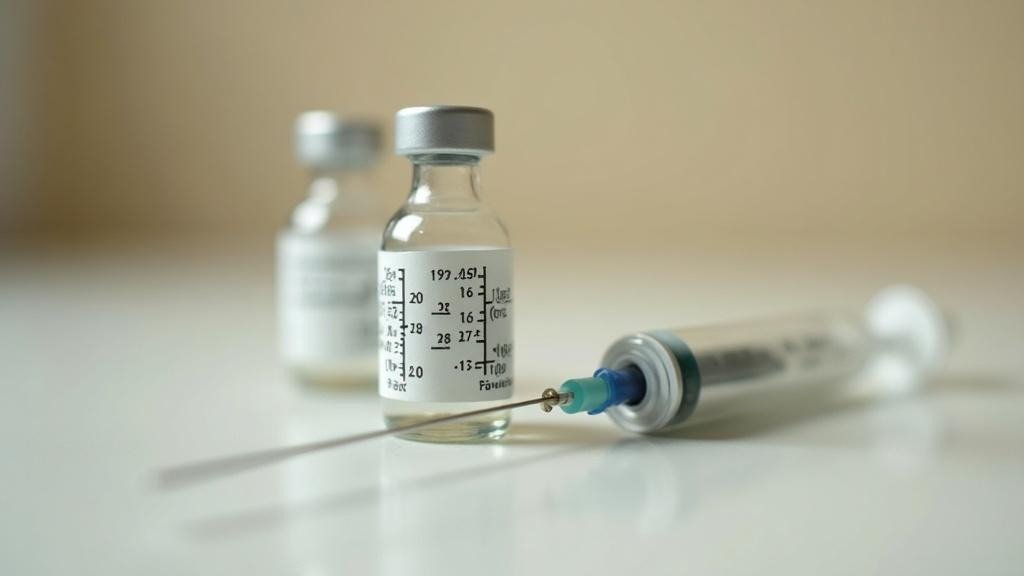
A useful calculator should make reconstitution feel boring. Enter the vial amount, enter the water volume, enter the target dose, and get a clear unit mark back.
1. FormBlends Peptide Calculator
Verdict: Best overall for clarity and syringe-type flexibility.
The thing that sets this tool apart is visible math. Most calculators spit out a number. This one shows the calculation so you can check it yourself. Enter your vial amount, the volume of bacteriostatic water you added, and your target dose per injection. You get concentration per mL, exact units to draw, and total doses in the vial.
It defaults to U-100 syringes (100 units per 1 mL), which is standard, but you can switch to U-50 or U-40. That matters. A lot of online guides silently assume U-100 and never say so. If you are using a different syringe, every number changes.
A visual syringe fill bar shows exactly where your plunger should land. One-tap presets cover BPC-157 (5 mg and 10 mg vials), TB-500 5 mg, ipamorelin 10 mg, tesamorelin 2 mg, and GLP-1 50 mg. The mg-to-mcg conversion happens automatically. The web tool is free with no account required, and the same calculator lives inside the FormBlends mobile app alongside dose logging and an injection-site rotation map. Built by a named company, not an anonymous page.
2. PeptideFox (peptidefox.com)
Verdict: Best for variety and visual guidance.
Thirty-plus peptides supported. That is a higher count than most calculators on this list. The site also includes a visual guide to walk through the reconstitution steps, which helps anyone doing this for the first time. Notably, it optimizes BAC water volume for clean unit draws, meaning it can suggest how much water to add rather than just accepting whatever you entered. That is a genuinely useful feature. Not many free tools think about it from that angle.
3. PeptideDeck
Verdict: Cleanest bare-bones interface.
Three inputs: peptide amount in mg, BAC water added in mL, target dose in mcg. Two outputs: concentration and draw volume in insulin units. Short. Fast. No presets, no frills, no visual aids. If you already know what you are doing and just want to verify a number quickly, PeptideDeck gets out of the way. The formula is the same reconstitution math every other tool uses; the difference here is that nothing distracts from it.
4. LeadWest Medical Calculator
Verdict: Solid for GLP-1 and growth hormone peptides.
LeadWest covers a specific set of compounds: retatrutide, BPC-157, TB-500, ipamorelin, CJC-1295, tesamorelin, sermorelin, and GHK-Cu. That list skews toward the peptides a medical provider is most likely to prescribe. The tool is attached to an actual medical practice rather than being a standalone anonymous page, which at minimum means someone with clinical context built it. No presets or syringe-type options are listed, but coverage of retatrutide is rare among free tools and worth noting.
5. MyPeptideMatch
Verdict: Best coverage of GLP-1 class injectables.
Free, no signup, and it specifically calls out semaglutide and tirzepatide alongside the more common healing peptides like BPC-157 and TB-500. That makes it more current than most. GLP-1 dosing has entirely different concentration conventions from the mcg-based healing peptides, and the fact that this tool handles both categories without conflating them is worth something. Straightforward interface with no login wall.
6. peptidereconstitutecalculator.com
Verdict: Narrow scope, useful for one specific use case.
This site does one thing: BPC-157, mcg to insulin units, on a U-100 syringe. If that describes your situation exactly, it works fine. The math is correct. Healing peptides like BPC-157 are typically dosed in the 250 to 500 mcg range per injection, and the tool handles that range well. The limitation is real though. Change the peptide, the syringe type, or the vial size, and you are on your own. No other compounds, no syringe-type switching, no presets.
A Few Things Worth Knowing Across All of These
The underlying math is identical for every lyophilized peptide. Total peptide in mcg, divided by BAC water added in mL, gives concentration per mL. Concentration divided by 100 gives units per mcg on a U-100 syringe. Every calculator on this list runs that same formula. What differs is interface, syringe support, preset availability, and whether the tool shows you the work.
Adding more BAC water does not change the total peptide in a vial. It changes the concentration. A more dilute solution means drawing more units for the same dose, not getting a different amount of peptide. Several of the tools above make this explicit. Several do not.
None of these tools prescribe a dose. They calculate how to measure one. What dose is appropriate for a given compound and individual is a clinical question, not a calculator question.
| Tool | Syringe Types | Presets | Shows Math | Compound Count |
| FormBlends | U-100, U-50, U-40 | Yes (6 presets) | Yes | Any lyophilized |
| PeptideFox | Not specified | Not specified | Visual guide | 30+ |
| PeptideDeck | U-100 (implied) | No | Partial | Any |
| LeadWest Medical | Not specified | No | No | 8 named |
| MyPeptideMatch | Not specified | No | No | 6+ including GLP-1 |
| peptidereconstitutecalculator.com | U-100 only | No | No | BPC-157 only |
Common Questions
Does it matter which of these calculators I use if the underlying math is the same?
It matters more than you would expect. All six tools run identical reconstitution math, but only FormBlends adjusts for U-50 and U-40 syringes. Use the wrong syringe assumption and your drawn volume is wrong even if the formula is correct. Visible math, syringe-type selection, and presets reduce the places where user error can creep in.
If I have a 10 mg BPC-157 vial instead of 5 mg, which tools can handle that without me doing extra work?
FormBlends has a 10 mg BPC-157 preset built in. The others, including PeptideDeck and PeptideFox, accept any mg input you type, so a 10 mg vial is no problem, you just enter the number manually. peptidereconstitutecalculator.com is the outlier. Its BPC-157 scope is narrow enough that non-standard vial sizes may fall outside what it was designed for.
Can any of these tools tell me how much BAC water to add to my vial, or do I have to decide that myself?
PeptideFox is the one tool here that actively suggests a BAC water volume optimized for clean unit draws, rather than simply accepting whatever you enter. Every other tool on this list treats the water volume as your decision and calculates from there. If you are unsure how much water to add, PeptideFox is the place to start.
Why does MyPeptideMatch handle semaglutide and tirzepatide when most peptide calculators ignore GLP-1 drugs entirely?
GLP-1 compounds like semaglutide and tirzepatide are dosed in mg, not mcg, and come in much higher concentrations than typical healing peptides. Most older calculators were built around the mcg convention and never updated. MyPeptideMatch explicitly supports both categories without mixing up the unit conventions, which reflects how the market for these tools has shifted since GLP-1 prescriptions expanded.
Is there any meaningful difference between using FormBlends on the web versus inside the mobile app?
The calculator itself is the same either way. The mobile app adds dose logging and an injection-site rotation map on top of it, which the standalone web tool does not include. If you are only reconstituting occasionally and just need the math, the free web version is sufficient. Regular users tracking multiple compounds across weeks will get more out of the app.
Sources
- peptidefox.com, public tool page (verified 2025)
- PeptideDeck public web interface
- LeadWest Medical calculator page
- MyPeptideMatch public tool page
- peptidereconstitutecalculator.com public tool page
- FormBlends peptide calculator, public web tool and app description (iOS/Android, Expo framework)
- General insulin syringe unit conventions: U-100/U-50/U-40 are standardized markings; 1 mL = 100 units on a U-100 syringe