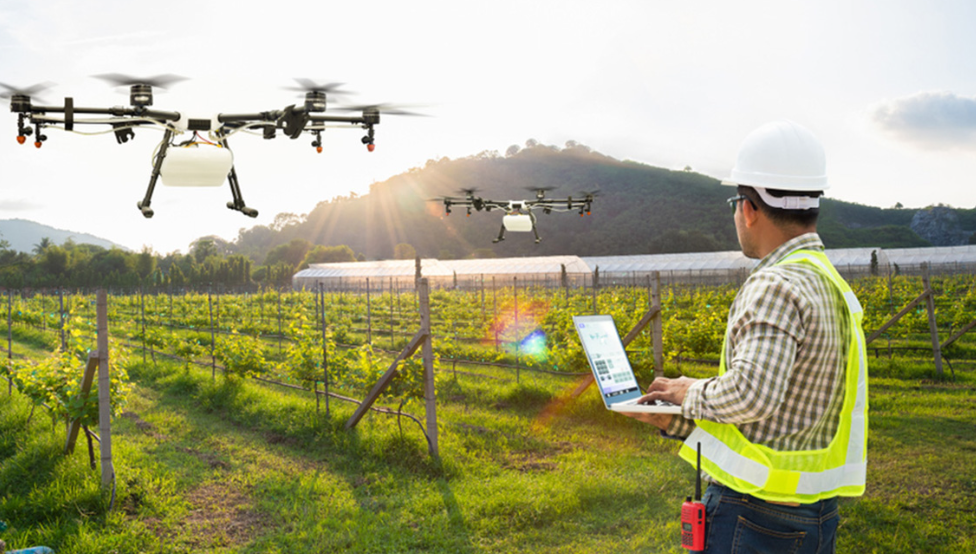
Technology significantly influences food security through advanced agricultural practices and data analytics. Precision agriculture enables farmers to monitor soil health and weather conditions effectively. This leads to better crop yields and efficient resource utilization. Meanwhile, biotechnology enhances crop resilience, reducing reliance on chemicals. Furthermore, digital supply chains optimize food distribution. Each of these elements contributes to a comprehensive strategy for addressing global food security challenges, yet questions remain about their long-term impact and integration.
How Does Precision Agriculture Support Food Security?
How can precision agriculture significantly enhance food security in an increasingly uncertain climate?
By employing advanced crop monitoring techniques, farmers can gather real-time data on soil health and weather conditions, enabling precise interventions.
This innovative approach allows for yield optimization, maximizing productivity while minimizing resource use.
Ultimately, precision agriculture presents a viable solution to bolster food security amidst growing environmental challenges and fluctuating market demands.
How Can Biotechnology Make Food Production More Sustainable?
Biotechnology offers transformative potential in enhancing the sustainability of food production systems, building on the advancements in precision agriculture.
Through genetic modification, crops can be engineered for enhanced resilience against pests and climate variability, reducing the reliance on chemical inputs.
This innovative approach not only increases yields but also promotes ecological balance, fostering a more sustainable agricultural landscape that aligns with the pursuit of food security.
See also: Technology and Financial Systems
How Can Data Analytics Enhance Food Management and Access?
While traditional food management systems often struggle with inefficiencies, data analytics offers a robust framework to enhance food access and distribution.
Through data visualization, stakeholders can identify patterns and trends, facilitating informed decision-making.
Predictive modeling enables proactive resource allocation, ensuring food reaches those in need.
This innovative approach empowers communities, fostering a more equitable distribution of food resources and improving overall food security.
Improving Food Distribution With Digital Supply Chains
As digital supply chains emerge as a transformative force in food distribution, they present innovative solutions to longstanding inefficiencies within the food system.
Blockchain logistics enhance traceability and transparency, ensuring food integrity from farm to table.
Meanwhile, mobile applications streamline communication among stakeholders, enabling real-time monitoring and quicker responses to demand fluctuations, ultimately fostering a more resilient and responsive food distribution network.
Conclusion
In the evolving landscape of food security, technology acts as a guiding compass, steering agricultural practices toward sustainability and efficiency. For instance, a farmer utilizing precision agriculture achieved a 30% increase in yield by leveraging real-time data insights. This not only illustrates the potential of technological integration but also emphasizes the interconnectedness of agricultural practices and food access. As the world grapples with food insecurity, embracing these innovations is akin to planting seeds of hope for future generations.