You may already know the pattern. A child grips the armrest before a cleaning, a parent puts off a filling for months, and a grandparent agrees to an exam only after pain leaves no room to wait. Dental anxiety rarely belongs to one person in a family. It moves quietly across generations, shaped by old memories, fear of pain, shame about oral health, and the cost of delayed care. Families seeking expert Invisalign solutions in Newton MA may also recognize how emotional barriers to treatment can affect every generation.
That is where a family dentist often changes the story. Seeing one provider for children, parents, and older adults creates familiarity, and familiarity lowers fear. The office feels less unknown, the routine feels less threatening, and small concerns get handled before they grow into emergencies. How family dentists ease dental fear for all ages comes down to trust, consistency, and care that fits each stage of life.
Family dental care reduces fear by making care feel familiar
Anxiety feeds on uncertainty. If you do not know what will happen, how long it will take, or whether it will hurt, your body reacts before your mind can calm it down. A family dental practice helps reduce that reaction because the setting becomes part of your normal life, not a place you visit only when something is wrong.
Children notice everything. They watch how adults talk about the dentist, how they react in the waiting room, and whether appointments are framed as punishment or routine care. If a child grows up seeing a parent speak calmly with the same dentist, fear has less room to take hold. That matters because avoidance often starts early and gets stronger over time.
Adults carry their own history into the chair. For some, it is a painful procedure years ago. For others, it is embarrassment over how long it has been since the last visit. Research from Harvard School of Dental Medicine explains that dental fear is common and often tied to loss of control, pain expectations, and past negative experiences. You can read more in this Harvard discussion of dental fear.
Older adults often face another layer. They may be managing dry mouth, gum disease, tooth loss, or medical conditions that make treatment feel more complicated. According to the National Institute of Dental and Craniofacial Research, oral health challenges remain widespread across the lifespan, especially when access, cost, and chronic disease intersect. The broader picture appears in this national report on oral health in America.
Dental anxiety in families grows when care is delayed
Fear rarely stays still. A postponed cleaning can become a cavity. A cavity can become a root canal. A child who misses routine visits may begin to associate the dentist only with discomfort. An adult who waits until pain is severe usually needs more time, more treatment, and more money. That raises stress before the appointment even starts.
You can see how this happens in ordinary life. A busy parent cancels a checkup because work ran late. Months pass. Their child overhears them say, “I know I need to go, I just do not want to deal with it.” That child then walks into their own appointment already primed to worry. Fear becomes part of the family script.
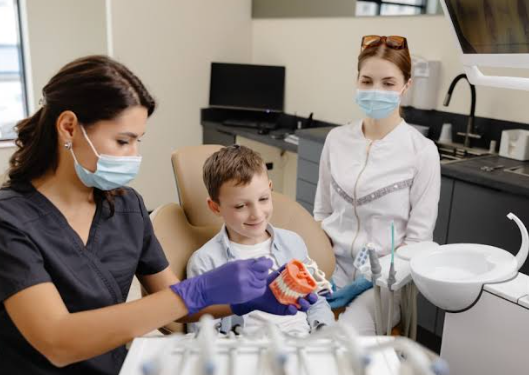
That script can change. A family dentist sees patterns across age groups and can respond early. One child may need simple tell show do communication. A teenager may need privacy and clear explanations. A parent may need shorter visits and options for phased treatment. An older adult may need slower pacing and a review of medications. This is one reason reducing dental anxiety with a family dentist works better than a one size fits all approach.
Tufts has also highlighted a simple truth in its coverage of dental unease: many people feel this way, and shame makes it harder to ask for help. That perspective appears in this Tufts piece on feeling uneasy at the dentist. When a practice treats anxiety as common rather than embarrassing, patients are more likely to return.
Routine family dentistry lowers stress and treatment burden
A trusted family dentist does more than clean teeth. They build predictable routines, explain what is happening in plain language, and adjust care before fear turns into avoidance. That can mean scheduling siblings together so the office feels familiar, using gentler pacing for nervous patients, or agreeing on a stop signal during treatment so you do not feel trapped in the chair.
| Situation | Delayed or emergency based care | Regular family dental care |
|---|---|---|
| Child with early nerves | First strong memory may involve pain or urgent treatment | Builds comfort through short, predictable visits and positive repetition |
| Adult with past bad experience | Fear grows, problems worsen, treatment becomes more involved | Trust develops over time, concerns are handled before they become major |
| Older adult with complex needs | Care may feel rushed and fragmented | Ongoing relationship supports pacing, medication review, and continuity |
| Family scheduling and cost | Multiple separate providers can increase stress and missed visits | One practice often simplifies planning and encourages preventive care |
Small actions make dental visits feel safer right away
Tell the office about anxiety before the appointment. Do not wait until you are in the chair. A brief note when scheduling gives the team time to plan for a calmer visit, whether that means extra time, a slower exam, or more explanation.
Use language at home that lowers fear instead of feeding it. Children hear more than adults think. Avoid using the dentist as a threat, and skip dramatic stories about painful treatment. Neutral, honest language works better. “They are going to count your teeth and clean them” gives a child something clear to expect.
Start with consistency, not perfection. If it has been years, you do not need to solve everything in one appointment. A consultation, exam, or gentle cleaning can be the first win. Returning for regular care is often the real turning point for anxious patients.
Steady family dental care creates trust across generations
Dental fear is common, and it is deeply human. It does not mean you are weak, careless, or overreacting. It means your body learned to protect you, even if that protection now gets in the way of care. Family dental care helps undo that pattern by replacing dread with familiarity, clear communication, and small positive experiences that add up over time.
If your family has been avoiding care, start with one appointment and one honest conversation. A calm, relationship based approach can make the dentist feel manageable again for your child, for you, and for the people who taught you how to feel about the chair in the first place.